
The northern provinces of Ha Giang and Cao Bang are not just scenic gems but also vibrant cultural tapestries woven with ethnic traditions, mountain legends, and borderland stories. In this Ha Giang Cao Bang travel blog, we invite you to go beyond the postcard views and explore the deep-rooted life of local people, the authenticity of rural highland Vietnam, and the thrilling experience of traveling through winding mountain passes.
Whether you’re planning your next motorbike journey or seeking inspiration for an off-the-beaten-path adventure, let this blog provide both practical guidance and a human touch through firsthand stories collected from locals and long-time travelers.
Why Ha Giang and Cao Bang Are a Perfect Pair
Traveling through Ha Giang alone is already a transformative experience. The Ma Pi Leng Pass, Dong Van Karst Plateau, and colorful Sunday ethnic markets provide an immersive connection to nature and culture. But when paired with a trip to Cao Bang, especially to marvel at Ban Gioc Waterfall or trek around the Ngườm Ngao Cave, your journey becomes a symphony of natural wonders and historic depth.
Ha Giang brings the raw mountainous edge, while Cao Bang offers soft rolling hills and serene lakes. Together, they make for a well-rounded and unforgettable travel itinerary in Northern Vietnam.

A Story from the Loop: Tea with a H’mong Grandmother
In the heart of the Ha Giang Loop, after an exhausting ride through steep switchbacks, I arrived at a remote village in the Meo Vac district. I was offered tea by an elderly H’mong woman named Già Say. Her wrinkled hands trembled slightly as she poured the herbal tea made from wild leaves she had gathered that morning.
Through a mix of broken Vietnamese and hand gestures, she told stories about the French colonial days, the changes in village life since electricity arrived, and the fading tradition of hand-embroidered skirts among the youth. Her laughter, however, was strong and full of life. The moment reminded me that Ha Giang is more than scenery—it is living memory.
This Ha Giang Cao Bang travel blog aims to bring you more such moments, highlighting how every trail has a tale.
Hidden Trails and Forgotten Temples in Cao Bang
Most travelers rush to Ban Gioc Waterfall without realizing that nearby lie ancient temples like Phat Tich Truc Lam Ban Gioc or the serene Thang Hen Lake system, each with stories whispered through time.
One morning, I followed a local guide named Tinh who brought me to an old path once used by Vietnamese revolutionaries. It led to a moss-covered pagoda forgotten by modern tourism. There were no crowds, no signs, only the sound of birds and distant cowbells.
Tinh shared stories of his grandfather, who fought in the resistance and used this trail to transport messages across the Chinese border. The authenticity of that experience outweighed any Instagrammable photo I could have taken.
Best Time to Visit and How to Move Around
If you’re planning your route based on this Ha Giang Cao Bang travel blog, the best time to visit is from September to November when the rice terraces glow golden and the weather is dry and clear. Spring (March to April) is another great window for witnessing blooming buckwheat and plum flowers.
Motorbikes remain the top choice for those riding the Ha Giang Loop. For Cao Bang, you can rent a scooter or hire a local driver to navigate the quieter countryside roads. For longer journeys between the provinces, sleeper buses or private cars are more practical, especially if you’re carrying luggage.
Local guesthouses, like Strawberry House in Dong Van, offer not only lodging but stories and connections. They can recommend trusted guides or even arrange community-based tours that support minority livelihoods.
The Power of People in Remote Places
A highlight in any Ha Giang Cao Bang travel blog has to be the people. There’s something humbling about being offered a bowl of corn wine at 7 a.m. in a stilt house by people who don’t speak your language, yet share everything they have.
One evening in Bao Lac, I stumbled into a Tay household during a family dinner. The host, a rice farmer named Lang, insisted I sit and eat with them. The meal was simple: rice, pickled bamboo shoots, boiled pork, and smiles all around.
Lang told me how tourism had brought both opportunity and concern. While younger generations benefit from tourism-based income, there’s also pressure to modernize and conform. “We want people to see our way of life, not change it,” he said.
That sentence stayed with me. It reminded me that traveling with respect is just as important as traveling with curiosity.
Exploring the Rich Culture of Ha Giang and Cao Bang
One of the most enriching aspects of traveling through Ha Giang and Cao Bang is the opportunity to immerse yourself in the vibrant cultures of Vietnam’s ethnic minorities. In Ha Giang, you’ll likely encounter the H’mong, Tay, and Dao communities. Their colorful clothing, intricate embroidery, and traditional wooden houses give travelers a vivid sense of life in the highlands.
In Cao Bang, the Nung and Tay people dominate the region. These communities maintain ancient customs such as making “khau nhục” (a traditional pork dish), weaving textiles, and hosting folk festivals tied to agriculture and ancestral worship. If you are visiting in the right season, don’t miss the Long Tong Festival—celebrated to pray for good harvests.
Staying at homestays or engaging with locals through cultural experiences gives a more meaningful dimension to your journey. Unlike traditional tours, a well-crafted Ha Giang Cao Bang travel blog offers readers a gateway into understanding how culture shapes the people and landscapes.
Seasonal Travel Tips
Timing your trip can greatly influence your experience. The best time to explore both Ha Giang and Cao Bang is from September to November and March to May. During these months, the weather is cool, skies are clear, and nature is at its most vibrant.
September offers the golden rice terraces of Hoang Su Phi, while November bathes the region in the yellow blooms of buckwheat flowers. Meanwhile, spring brings festivals, plum blossoms, and lush green valleys. These are the periods when travel photos and drone shots look especially magical—something every Ha Giang Cao Bang travel blog should emphasize.
Travelers during the rainy season (June to August) should be cautious as roads can become slippery and landslides are not uncommon in mountainous areas. Winter, especially in December and January, brings cold temperatures that can drop close to freezing in Ha Giang.
Escape the crowds and dive into authentic Northern Vietnam beauty through our Tour Ha Giang – Cao Bang – Ban Gioc, a journey packed with wonder and discovery.
Navigating Food and Local Cuisine
No travel blog would be complete without mentioning food. Northern Vietnam’s mountain regions have a unique culinary identity, distinct from the better-known dishes of Hanoi or Saigon.
In Ha Giang, try thang co (a traditional H’mong soup), corn wine, or grilled meat skewers sold at Dong Van night market. Cao Bang, on the other hand, is famous for banh cuon Cao Bang (steamed rice rolls filled with wood-ear mushrooms and minced pork, served with bone broth) and vit quay 7 vi (seven-spice roast duck).
Food markets are not only about eating—they’re cultural experiences. Vendors chat over steaming pots, children nibble on sweet sticky rice, and elders sit sipping tea while watching the bustle. These are the moments that turn a simple trip into a memory worth sharing in any Ha Giang Cao Bang travel blog.
Photography and Drone Travel Considerations
Capturing the essence of Ha Giang and Cao Bang requires an eye for detail and a bit of planning. With the terrain as dramatic as it is, drone photography is particularly useful for showcasing winding passes like Ma Pi Leng or the stair-step rice fields of Cao Bang’s Trung Khanh district.
However, travelers should be aware of drone laws in Vietnam. While drones are permitted, flying them near border areas or military installations is prohibited. Always check local guidelines before flying. A Ha Giang Cao Bang travel blog that features drone photography should mention these regulations to keep readers informed and respectful of local laws.
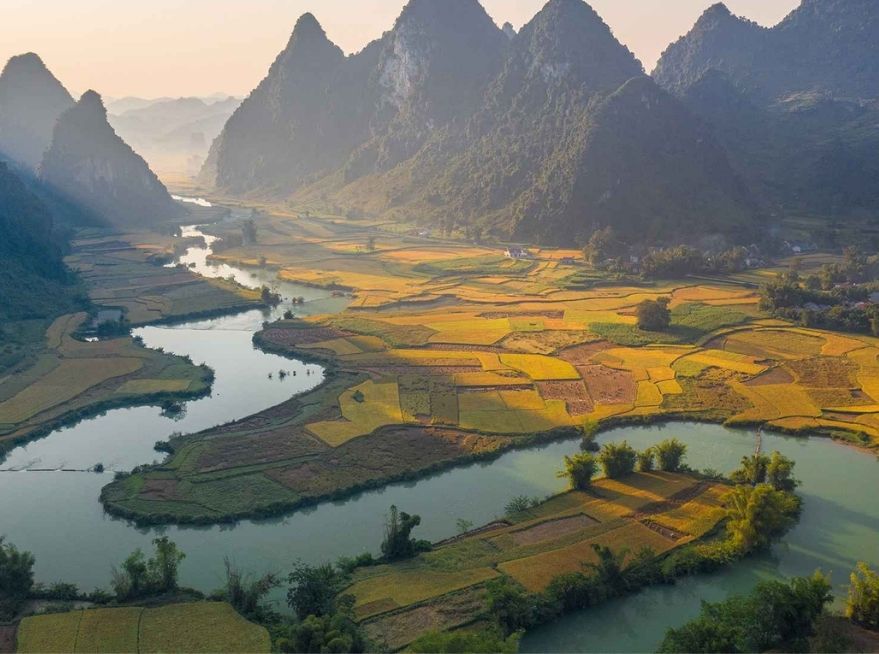
Early mornings are best for capturing mist-filled valleys, while sunset paints the limestone peaks in golden hues. These moments are fleeting but unforgettable, especially when preserved through well-framed shots and thoughtful storytelling.
Off-the-Beaten-Path Recommendations
While Ban Gioc Waterfall and Ma Pi Leng Pass are essential stops, consider adding lesser-known destinations to your itinerary. In Ha Giang, the Lung Cu Flag Tower offers panoramic views all the way to the Chinese border. Visit Du Gia, a peaceful village surrounded by rice fields and waterfalls, ideal for motorbike riders looking for serenity.
In Cao Bang, the Nguom Ngao Cave is a spectacular underground wonder, full of stalactites and winding chambers. The Pac Bo Cave area, where Ho Chi Minh lived during revolutionary times, adds historical depth to the journey.
Such hidden gems offer solitude and authenticity that popular spots can sometimes lack. They are ideal subjects for expanding any Ha Giang Cao Bang travel blog into a treasure trove of personal discovery and travel wisdom.
Sustainable Travel Advice
As Ha Giang and Cao Bang gain popularity, the impact of tourism becomes more evident. Travelers are encouraged to support local economies by staying in homestays, hiring local guides, and buying handmade crafts.
Avoid littering, reduce plastic use, and be mindful of wildlife. Cultural respect is also paramount—ask before photographing people, learn a few words in the local dialect, and dress modestly when visiting temples or rural communities.
A responsible Ha Giang Cao Bang travel blog doesn’t just showcase beauty—it educates readers about the importance of preserving it for future generations.
FAQs about Ha Giang Cao Bang Travel Blog
What is the best route for traveling from Ha Giang to Cao Bang?
The best route connects Ha Giang to Cao Bang through Meo Vac, Bao Lac, and Tinh Tuc. Though longer than direct routes, it offers the most scenic views and cultural stops along the way.
Is it possible to travel independently between Ha Giang and Cao Bang?
Yes, many travelers choose to ride motorbikes or hire private transport. The roads are mountainous and challenging, so prior experience is recommended. Local buses also operate but are less flexible.
What makes a Ha Giang Cao Bang travel blog different from other Vietnam travel blogs?
It highlights Vietnam’s remote northern regions, where landscapes, ethnic culture, and adventure converge. These travel blogs offer deeper insight, real traveler stories, and practical tips beyond tourist hotspots.
If you’re planning your journey to Northern Vietnam, the Ha Giang Cao Bang travel blog by Strawberry House provides a mix of cultural insights, personal storytelling, and essential travel advice to guide your adventure. Whether you’re a motorbike enthusiast, cultural explorer, or drone photographer, there’s something waiting for you beyond the mountains.
Let the journey begin Ha Giang Tour—with stories waiting to be written.
STRAWBERRY HOUSE
Address: SN 209, 20/8 Street, Ha Giang City, Ha Giang Province.
Phone: +84 838285888


