
Ha Giang, located in the northernmost part of Vietnam, is a region of breathtaking natural beauty, rich cultural history, and unparalleled adventure. The Ha Giang Loop, a popular route among travelers, offers an exhilarating way to explore the rugged landscapes, terraced rice fields, and remote villages of the region. Whether you’re planning a solo motorbike trip or joining a group tour, there are essential Ha Giang Loop tips that can ensure a safe and enjoyable journey.
For those seeking an unforgettable experience, the Ha Giang Loop is a must-do. The route, which spans over 300 kilometers, takes you through winding mountain roads, past lush valleys, and over towering peaks. It is not only a feast for the eyes but also a test of your riding skills and endurance. In this blog post, we will share valuable tips to make the most of your Ha Giang Loop adventure while keeping your safety in mind. Discover unforgettable experiences at Strawberry House – the perfect stopover for all riders, offering essential Ha Giang Loop Tips to help make your journey safer, smoother, and more memorable throughout the loop.
Prepare for the Road: What to Know Before You Ride
Before embarking on your Ha Giang Loop adventure, proper preparation is key. Here are some essential Ha Giang Loop tips to ensure that you’re ready for the journey:
-
Plan Your Route: While the Ha Giang Loop is relatively easy to navigate, it’s important to plan your route carefully. The journey typically spans four days, but it can vary depending on your pace and the areas you wish to explore. Consider researching the different routes and landmarks you want to visit, such as the Dong Van Karst Plateau, the Ma Pi Leng Pass, and the ethnic minority villages along the way.
-
Check Your Motorbike: The Ha Giang Loop is best experienced on a motorbike, and it’s essential to ensure that your bike is in good condition. If you’re renting a bike, check it thoroughly before setting off. Look for any signs of wear and tear, especially on the brakes, tires, and suspension. Make sure you have a helmet that fits properly and a waterproof bag for your belongings.
-
Weather and Seasons: The weather in Ha Giang can be unpredictable, so pack accordingly. The best time to visit the Ha Giang Loop is during the dry season, from October to April, when the roads are less slippery and the weather is more predictable. If you’re traveling during the rainy season (May to September), be prepared for wet and slippery roads.
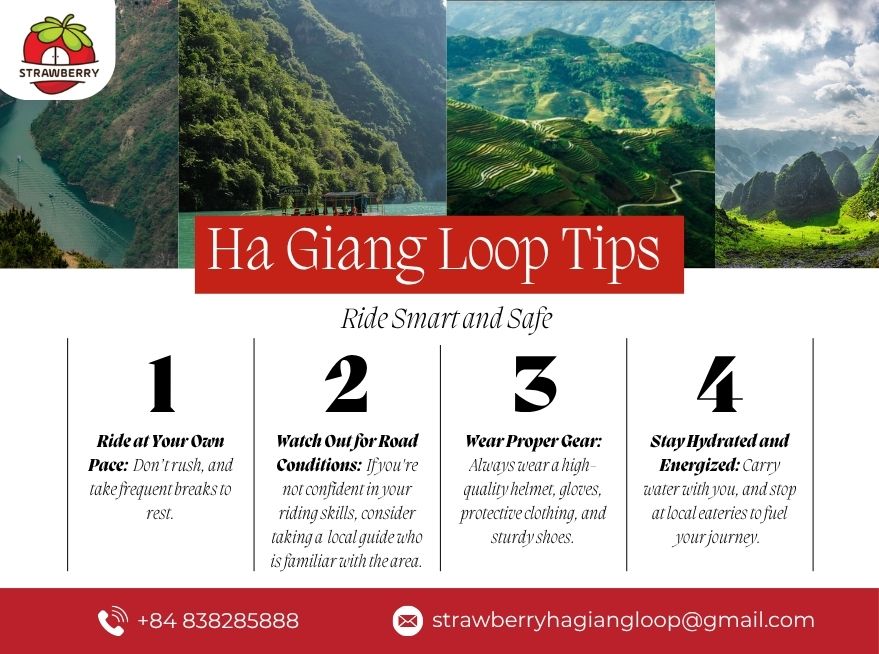
Ha Giang Loop Tips
Essential Ha Giang Loop Tips for Safety
The Ha Giang Loop can be challenging, especially for first-time riders. It’s crucial to stay safe and avoid taking unnecessary risks. Here are some safety tips to help you have a smooth and enjoyable ride:
-
Ride at Your Own Pace: The Ha Giang Loop is known for its steep mountains and winding roads, so it’s essential to ride at a pace that is comfortable for you. Don’t rush, and take frequent breaks to rest. The terrain can be challenging, and it’s better to take your time and enjoy the scenery than to risk an accident by speeding.
-
Wear Proper Gear: While riding in Ha Giang, your safety is paramount. Always wear a high-quality helmet, gloves, protective clothing, and sturdy shoes. The weather can change rapidly, so bring a waterproof jacket and pants to keep yourself dry in case of rain.
-
Stay Hydrated and Energized: The Ha Giang Loop is a physically demanding journey, so make sure to stay hydrated and energized throughout the ride. Carry water with you, and stop at local eateries to try traditional Vietnamese dishes that will fuel your journey. This is also a great way to immerse yourself in the local culture.
-
Watch Out for Road Conditions: Some sections of the Ha Giang Loop are remote, with roads that can be rough and unpaved. Watch out for potholes, gravel, and loose rocks, especially during the rainy season. If you’re not confident in your riding skills, consider taking a guided tour with a local guide who is familiar with the area.
-
Take Your Time at Scenic Stops: One of the highlights of the Ha Giang Loop is the opportunity to stop at picturesque locations along the way. The Ma Pi Leng Pass, known as one of the most beautiful roads in Vietnam, offers stunning views of the valleys and rivers below. Take your time to enjoy these views and snap some photos. However, be cautious when stopping, especially on sharp bends, as some of the roads can be narrow and busy.
What to Expect on the Ha Giang Loop
The Ha Giang Loop offers a unique experience that combines adventure with cultural immersion. Here’s what you can expect along the route:
-
Stunning Landscapes: The Ha Giang Loop is famous for its dramatic landscapes, including towering limestone peaks, deep gorges, and lush valleys. The Dong Van Karst Plateau, a UNESCO Global Geopark, is a highlight, featuring striking limestone formations and scenic roads that wind through remote areas.
-
Cultural Encounters: The region is home to a variety of ethnic minority groups, including the H’mong, Tay, and Dzao peoples. Along the Ha Giang Loop, you’ll have the opportunity to interact with locals and learn about their traditions, customs, and way of life. Stop by the local markets in towns like Dong Van and Meo Vac to shop for handcrafted goods and traditional clothing.
-
Challenging Terrain: As mentioned earlier, the Ha Giang Loop is known for its challenging terrain. Some sections of the route are steep and winding, and others can be rough or unpaved. For riders with experience, this presents an exciting challenge, but for beginners, it can be daunting. It’s important to ride carefully and take breaks when needed.
Where to Stay Along the Ha Giang Loop
Along the Ha Giang Loop, there are various accommodations ranging from budget guesthouses to more comfortable hotels. Most travelers stay in small towns like Dong Van, Meo Vac, and Ha Giang city. Many of these places offer homestays, which allow you to connect with local families and experience traditional hospitality.
What to Pack for the Ha Giang Loop
Packing wisely is crucial for a successful trip. Here are some essentials to bring with you:
-
A good quality helmet
-
Waterproof jacket and pants
-
Comfortable riding gloves and sturdy shoes
-
A first aid kit
-
Sunscreen and sunglasses
-
A power bank for your phone or camera
-
Water and snacks
-
A waterproof bag for your belongings

Ha Giang Loop Tips
Immerse Yourself in Local Culture
While the stunning landscapes are undoubtedly a major draw, the cultural experience is just as important. Ha Giang is home to a diverse mix of ethnic groups, each with its own unique customs, traditions, and way of life. You’ll encounter communities such as the H’mong, Tay, and Dzao people, whose homes are scattered across the hillsides and valleys. Stopping by a local homestay or visiting the markets is a great way to learn about their traditions, craftsmanship, and history. Many travelers find that these interactions are one of the most rewarding parts of their Ha Giang Loop journey.
If you can, take time to visit some of the traditional villages along the route. For example, the H’mong people are known for their distinctive clothing, and their homes are often made from stone and wood, giving them a rustic yet charming feel. Be respectful when taking photos and consider purchasing local products like handmade textiles or crafts as a way to support the community.
Experience the Local Cuisine
Food is another aspect that travelers rave about when doing the Ha Giang Loop. The region offers a variety of delicious dishes that reflect the area’s unique geography and cultural influences. While traveling, be sure to try local specialties such as:
-
Thang Co: A traditional dish made from beef, pork, and innards, commonly eaten by the H’mong people. It’s a flavorful and hearty dish perfect for the chilly mountain climate.
-
Rice Wine: Often homemade, rice wine is a staple in Ha Giang and is used in many local rituals. Try it at a homestay for an authentic experience.
-
Com Lam: A delicious dish made from rice cooked in bamboo tubes, often served with grilled meats or vegetables.
You’ll find many opportunities to try these dishes at local eateries along the loop. Don’t hesitate to stop and engage with the locals – food is an integral part of the Ha Giang experience.
Take Advantage of Scenic Stops
The Ha Giang Loop is dotted with breathtaking viewpoints that are worth stopping for. The Ma Pi Leng Pass, also known as the “King of the Passes,” is a must-see stop on your journey. Here, you’ll find some of the most stunning panoramic views of the valleys and rivers below. The winding roads and towering mountains create a dramatic landscape that feels like a dream come to life.
Other notable scenic stops include the Dong Van Karst Plateau and the cliffs of the Quan Ba Twin Mountains. Each of these spots offers a unique perspective of the natural beauty that defines Ha Giang. Be sure to pack your camera, but also take time to sit back and fully immerse yourself in the landscape. Sometimes, the best moments come from simply soaking in the view without rushing.
Staying Connected Along the Loop
While Ha Giang’s remoteness is part of its charm, it can also present challenges in terms of connectivity. Many areas along the Ha Giang Loop have limited or no mobile signal, especially in the more isolated regions. If you need to stay connected, it’s a good idea to inform someone of your itinerary and let them know when you’ll be in areas with service. Some homestays or guesthouses may offer Wi-Fi, but it’s always best to plan ahead and not rely too heavily on your phone for navigation or communication.
The Ha Giang Loop is a journey like no other. From the challenging roads to the awe-inspiring landscapes and the rich cultural heritage, this is an adventure that will stay with you long after you’ve returned home. By following these Ha Giang Loop tips, you can ensure that your experience is safe, enjoyable, and full of unforgettable moments.
Whether you’re riding alone, with a friend, or as part of a guided tour, the Ha Giang Loop is sure to provide you with memories that will last a lifetime. So, gear up, take a deep breath, and embark on one of Vietnam’s most spectacular adventures.
See more about Ha Giang Tour Packages, Itineraries, and Travel Tips to make the most of your adventure in northern Vietnam.
STRAWBERRY HOUSE


