
A journey to Ha Giang is more than just winding mountain passes, vibrant markets, and ethnic minority villages. It’s a deep dive into Northern Vietnam’s rich culinary culture. For travelers on the Ha Giang Loop, food is not only fuel — it’s an essential part of the experience. Whether you’re tasting spicy grilled meats at a night market or sipping corn wine in a homestay, Ha Giang tour local food offers flavors as unforgettable as the scenery.
At Strawberry House, we believe that the best way to connect with a place is through its cuisine. That’s why we’ve curated insights into what to eat and where to find it as you explore this majestic province. If you’re looking for an authentic Ha Giang Tour that satisfies your appetite for adventure and flavor, let us be your guide.
What Makes Ha Giang Cuisine Unique?
Unlike the well-known dishes of Hanoi or Ho Chi Minh City, Ha Giang’s culinary scene remains deeply regional. The food here reflects the province’s highland geography, cooler climate, and diverse ethnic cultures including H’mong, Tay, Dao, and Lo Lo.
Local ingredients often come straight from terraced farms or the forest, and dishes are cooked using techniques passed down through generations. Here, traditional methods meet hearty ingredients: think buffalo meat, forest mushrooms, fermented bamboo, sticky rice, and an array of pickled vegetables. These rustic flavors reflect the soul of Ha Giang — bold, simple, and deeply satisfying.
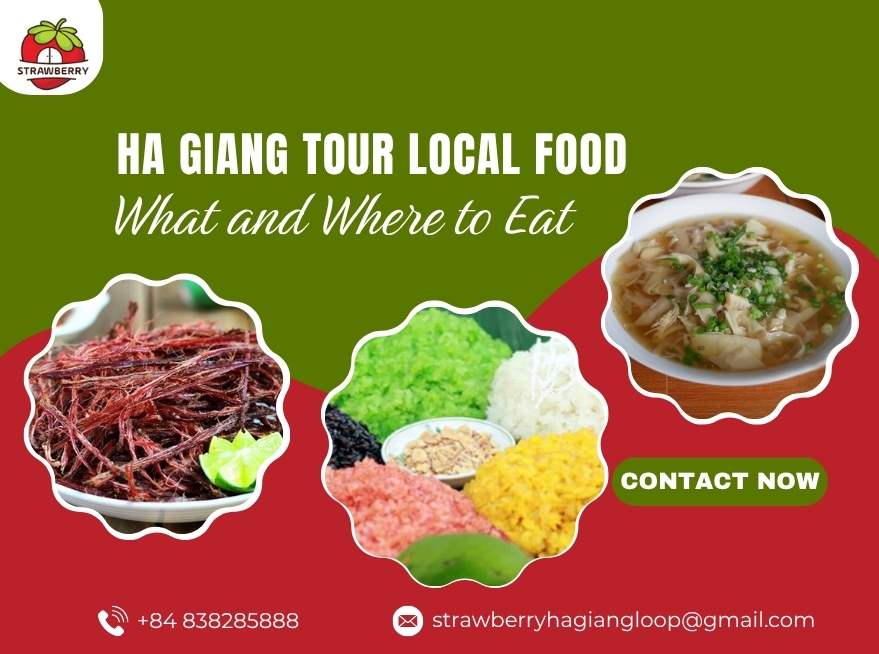
Must-Try Dishes on a Ha Giang Tour Local Food Experience
Thắng cố (horse meat stew)
This dish is often served during local festivals or at traditional markets like Meo Vac or Dong Van. Thắng cố combines horse meat with herbs, spices, and broth cooked over open fire. Though it may challenge some palates, it’s a true cultural experience and one of the most famous dishes tied to the region’s ethnic heritage.
Cháo ấu tẩu (toxic tuber porridge)
Made from a tuber that’s poisonous unless carefully boiled for hours, this rice porridge is both medicinal and deeply rooted in local life. It’s typically eaten at night and is believed to warm the body, especially in the cold highland evenings.
Bánh cuốn trứng (egg-filled rice rolls)
Different from Hanoi-style bánh cuốn, Ha Giang’s version is steamed with egg and served with pork broth instead of fish sauce. It’s a popular breakfast food among locals and travelers alike, often found in Dong Van or Yen Minh towns.
Lợn cắp nách (free-range pig)
These small, black pigs are raised in the mountains and often grilled or roasted whole during festivals. The meat is juicy and flavorful, often served with salt, pepper, and local herbs.
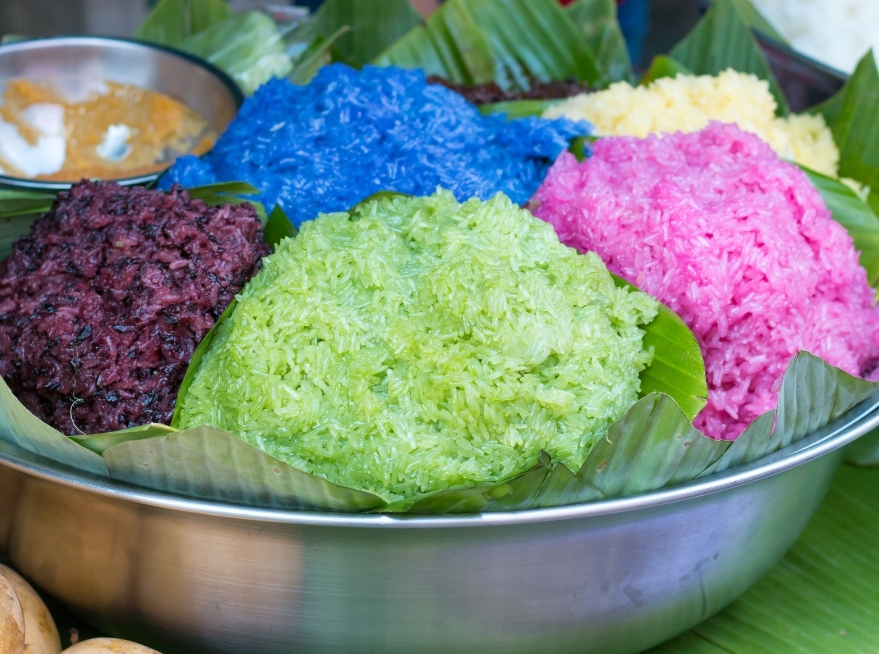
Five-colored sticky rice (xôi ngũ sắc)
This dish is as beautiful as it is meaningful. Colored using natural ingredients like turmeric, pandan, or magenta leaves, each color represents a different natural element or spiritual belief. Common during Tet and other celebrations, this dish is often found in local homes or small village eateries.
Where to Eat on the Ha Giang Loop
Dong Van Old Quarter
This charming town is a great place to stop during your Ha Giang tour local food journey. Try street food vendors serving skewers, sweet desserts, or warm bowls of phở gà. The local market on Sundays is a highlight for tasting grilled meats and herbal broths.
Meo Vac Night Market
Only held on weekends, this market transforms into a lively hub of food, music, and culture. It’s a great place to try thắng cố, grilled bamboo rice, or H’mong-style sausage while sitting among locals and sipping homemade corn wine.
Du Gia Homestays
Many of our guests at Strawberry House enjoy extending their Ha Giang Tour to Du Gia. Local families prepare delicious home-cooked meals using vegetables grown in their gardens and meat from the nearby hills. Dining here feels like becoming part of the family.
Quan Ba and Lung Tam Villages
Known for their handmade crafts and textiles, these villages also offer opportunities for immersive culinary experiences. Join a cooking class or taste traditional sticky rice and wild mushroom soup after visiting local artisans.
Combining Food and Travel: More Than Just Eating
When you take a Ha Giang tour local food or hop on a guided loop tour, each stop becomes a new culinary adventure. Food tours in Ha Giang are not confined to cities or restaurants — they happen around campfires, at roadside stalls, in remote villages, and during spontaneous moments on the road.
Some of our guests on the Ha Giang tour local food have said the food experiences along the way rival the waterfalls and mountains in memory. From sharing a hot pot under starlight to sipping rice wine during a village celebration, these moments are where culture and cuisine meet in the most human way possible.
Seasonal Dishes You Shouldn’t Miss
One of the beautiful things about traveling in the North of Vietnam is the connection between food and the seasons. The Ha Giang tour local food experience varies depending on when you visit. Each season brings its own flavors and specialties, often tied to agricultural cycles or ethnic celebrations.
Spring
This is the season of rebirth, with plenty of green vegetables and herbs in bloom. You’ll find dishes made with mustard greens, young bamboo shoots, and spring mushrooms. Festivals like the Gau Tao of the H’mong people often involve communal meals, music, and grilled mountain pork.
Summer
During the hotter months, travelers often seek lighter, cooling dishes such as green papaya salad with pork skin, wild fig leaf rolls, or soups made from jungle vegetables. Summer fruits like plums and apricots are also abundant and sold in baskets along the road.
Autumn
As rice harvesting begins in Hoang Su Phi and surrounding valleys, you’ll see freshly harvested rice turned into xôi (sticky rice) or bánh chưng (rice cakes). Autumn is also ideal for hiking and enjoying the cooler air with warm mountain dishes like herbal chicken stew.
Winter
Ha Giang winters can be cold, especially in December and January. Locals turn to heartier dishes like thắng cố, corn wine, roasted black chicken, or ginger-infused broths to stay warm. Street vendors serve warm sweet corn or taro desserts that pair perfectly with the cool air.
How to Include Food in Your Ha Giang Loop Adventure
Whether you’re on a private Ha Giang tour local food or a self-guided motorbike trip, food can be integrated into your journey in several ways. At Strawberry House, we recommend mapping your Ha Giang Loop stops based not only on scenery but also on culinary discovery.
Here are a few ways to do this:
Plan Your Stops Around Markets
Markets in Ha Giang are often held weekly, with locals from surrounding villages gathering to trade, socialize, and eat. Dong Van Sunday Market, Meo Vac Market, and Lung Phin Market are all excellent for trying local dishes, snacks, and drinks.
Join a Homestay Cooking Experience
Many homestays — especially those in Du Gia, Thon Tha, or Quan Ba — offer cooking lessons where you can learn how to prepare local dishes. These experiences deepen your understanding of food while building connections with your hosts.
Travel with Food in Mind
Whether you choose a Ha Giang motorbike rental or go by car, bring a reusable container to save leftovers or pack snacks from markets. Some regions are remote and food options may be limited, so having backup rations like sticky rice or sweet potato chips can be helpful.
Combine Food and Culture
Food is a gateway to culture, especially in places like Lung Cu or Dong Van, where dishes are linked to ethnic identity. Ask your hosts or guides about the meaning of dishes or the origin of ingredients — it adds a layer of richness to every bite.
From Ha Giang to Ban Gioc: The Culinary Journey Continues
For those venturing on the Tour Ha Giang – Cao Bang – Ban Gioc, the food adventure expands. As you cross into Cao Bang province, flavors shift subtly. Try smoked buffalo meat in Bao Lac, grilled stream fish in Trung Khanh, or Cao Bang’s specialty bánh cuốn with bone broth.
In Ha Giang tour local food, near the majestic waterfall, trout and duck dishes are common. Local corn wine and forest greens continue to play a role, but with a different taste profile due to regional herbs and cooking techniques. This combined loop is a food lover’s dream — a continuous tasting trail that complements the visual grandeur of northern Vietnam.
Where Ha Giang Bus Tickets Come Into Play
If you’re planning your trip independently, booking your Ha Giang bus tickets in advance is a good idea, especially during weekends and holidays. Buses typically leave from Hanoi and arrive in Ha Giang city early in the morning — perfect timing to grab your first bowl of cháo ấu tẩu or a hot bánh cuốn trứng at the market before starting your loop.
At Strawberry House, we help travelers organize their transport so they can arrive rested and ready for a culinary adventure. Whether you join a group tour or go solo with a motorbike rental, the food of Ha Giang is ready to welcome you.
Why Strawberry House Is the Perfect Base for Food Lovers
Located in the heart of Ha Giang, Strawberry House offers not just cozy accommodations but also food-focused experiences designed for curious travelers. Our hosts cook with fresh, local ingredients and love to introduce guests to traditional dishes — from hand-rolled spring rolls to rare forest herbs.
Guests can also:
-
Visit our herb garden used in traditional stews and teas
-
Join communal dinners with other travelers from around the world
-
Attend seasonal food tastings or cooking workshops
-
Ask for custom route suggestions focused on local markets and food villages
Whether you’re traveling for the first time or returning to deepen your connection, our mission is to bring you closer to Ha Giang through the lens of its culture, food, and people in Ha Giang tour local food.
FAQs about Ha Giang Tour Local Food
What is the best time to try 5?
Every season offers something different, but autumn and winter are especially rich in flavor and food diversity due to the harvest and cold-weather dishes.
Are vegetarian options available during a Ha Giang tour?
Yes. While meat is common, many dishes are plant-based or can be adapted. Inform your tour provider or homestay in advance. At Strawberry House, we serve both vegetarian and vegan meals.
Can I bring home local food from the tour?
You can purchase items like dried buffalo meat, homemade corn wine, or preserved herbs from local markets, but be sure to check customs regulations if you plan to fly internationally.
Exploring Ha Giang tour local food is more than trying new flavors. It’s a journey through landscapes, traditions, and the hands of those who keep culinary culture alive. From street markets to homestay kitchens, each dish tells a story — one you get to taste, share, and remember.
Find out more about Ha Giang Tour Night Market collections, local cooking, and immersive food journeys at Strawberry House by visiting our travel video section and planning your tour today.
STRAWBERRY HOUSE
Address: SN 209, 20/8 Street, Ha Giang City, Ha Giang Province.
Phone: +84 838285888


